
When Deterioration is Faster Than Reform: 13 Predictions for 2026
Welcome to Bits, Bobs & Big Ideas #29 - Your Bi-Monthly Dose of Insight, Ideas, and Impact!

Thanks for being part of Bits, Bobs & Big Ideas, now read in 84 countries!
If my analyses help you think differently about institutions, leadership or reform, please support my work with a paid subscription or buy me a coffee. Small gestures, they directly enable me to continue developing deeper, more sustained insights. But, as always, sharing this newsletter with colleagues remains one of the best ways to provide support.
2026 opened with US military action in Venezuela – a stark reminder that deterioration is accelerating and really anything is on the table. Last year, I predicted some things accurately and for others my hope was too generous. My warnings about Trump, multilateral fragmentation, and climate acceleration materialized. My hopes for FfD4 transformation, private sector mobilization, and genuine partnership fell short. The lesson? Deterioration is happening faster than the reforms. And now, barely into 2026, we’re already seeing the geopolitical fragmentation playing out in real time.
Below is my (long list of) predictions for 2026…and some thoughts on what we must do about them.
I. The Multilateral System: Functional Collapse or Forced Evolution?
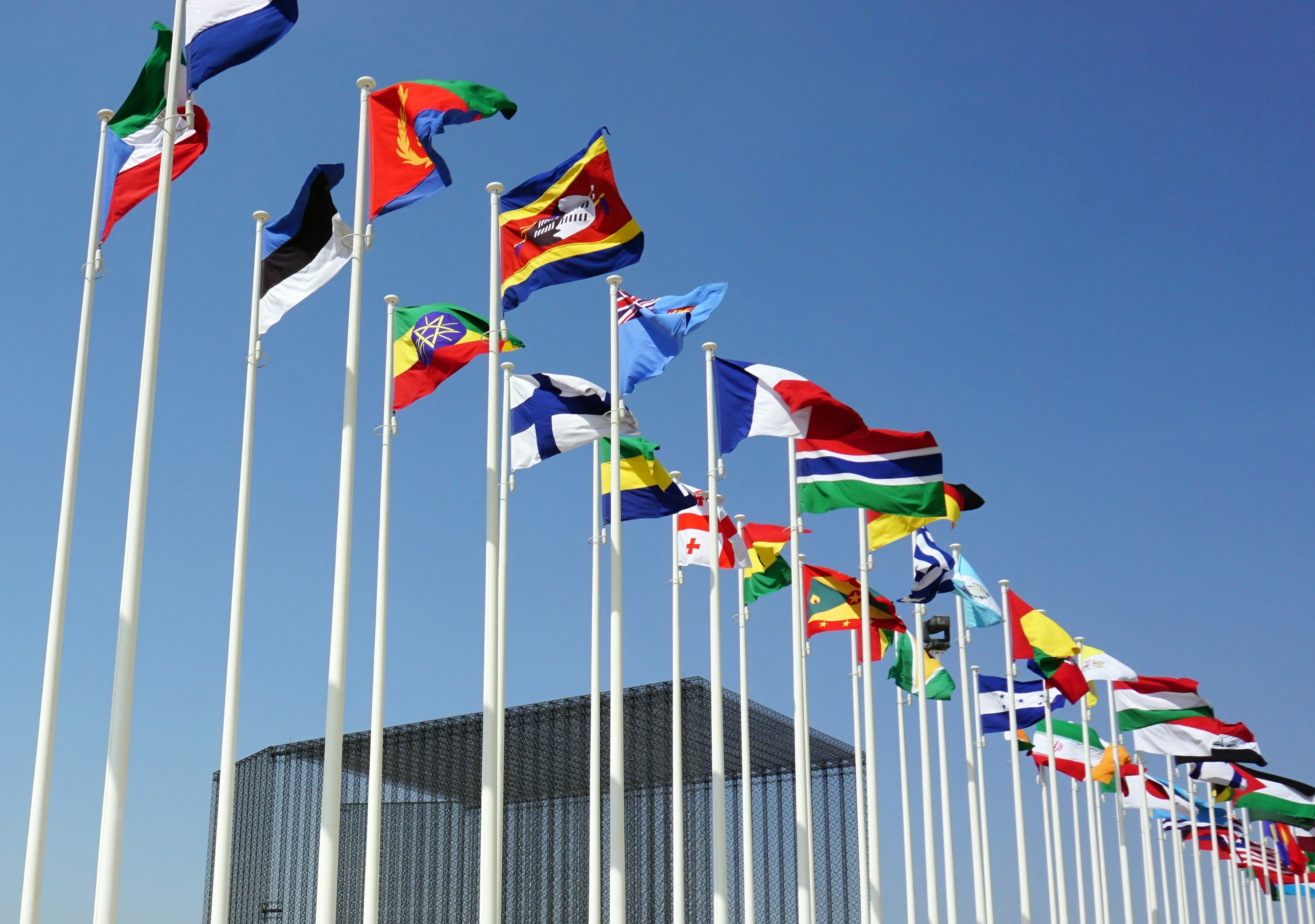
Prediction 1: The UN will continue to face its most severe financial crisis since its founding, with operating reserves approaching depletion in 2026.
The US payment delays that started in 2025 will intensify in 2026. By September, the UN will exhaust its limited reserve funds and face genuine operational paralysis - not the routine budget crises we’ve grown accustomed to, but an actual inability to meet payroll and maintain basic functions. China will not fully fill the gap despite its positioning. Instead, we’ll see the emergence of a multi-speed UN: certain programs (those with diversified or politically protected funding streams) will remain functional while others (human rights mechanisms, peacekeeping operations in non-strategic regions) will atrophy.
The myth that the UN is “too important to fail” will be tested. It can fail. Parts of it will.
Call to action: European donors and middle powers (smaller agenda-shaping coalition-builders) must form a “Coalition for Functional Multilateralism” before the UN General Assembly in September 2026. This coalition should commit to surge funding for core UN operations while demanding governance reforms that reflect 21st century power realities.
Half-measures won’t cut it - either commit to a reformed multilateralism or admit we’re managing organizational decline.
Prediction 2: At least three UN specialized agencies will announce “restructuring” plans that are effectively managed closures of major programs.
Entities like the ILO, FAO, or UNIDO will announce “strategic repositioning” – as already seen in other agencies in 2025 – that involves closing regional offices, ending flagship programs, and reducing headcount by 30% or more. The language will emphasize “efficiency” and “focusing resources” but the reality will be fiscal starvation that forces retreat.
Call to action: Donors must stop the dishonest rhetoric about “doing more with less.” Be honest: fewer resources means less gets done. Either fund the multilateral system adequately or acknowledge you’re choosing to dismantle it. The alternative of pretending underfunded institutions can maintain effectiveness serves no one.
Strategic and coordinated choices need to be made about which entities should survive and those that slowly get abolished.
II. Development Finance: The Aid Architecture Fragments
Prediction 3: By December 2026, total ODA from DAC donors will fall below $180 billion for the first time since 2019, while China’s development finance will be perceived by many partners as more predictable and politically reliable than DAC aid.
The decline we anticipated in 2025 will accelerate in 2026. US aid will be hollowed out to skeletal levels. European fiscal pressures from defence spending increases to domestic populist demands and recession fears will force further ODA cuts across major donors. Meanwhile, China will consolidate its position not by dramatically increasing overall flows, but by maintaining steady engagement while OECD-DAC countries retreat. The symbolic crossover won’t happen in total dollars, but in recipient perception of reliable partnership.
Call to action: This is the year to be honest about what we can fund. 2025 showed that ODA levels decrease while defence spending increased. There are no indications that this very artificial link between the two will fade in the political rhetoric.
Therefore, focus remaining resources on genuine catalytic investments - climate adaptation finance, regional public goods, pandemic preparedness - rather than spreading declining funds across legacy programs that can’t achieve scale.
Prediction 4: At least two G7 countries will announce they’re merging their development agencies with foreign ministries or trade departments.
“Integration” of development programming into foreign policy structures will be framed as “coherence” and “efficiency” but represents the end of development as a distinct policy domain. This isn’t necessarily catastrophic if done right, as development divorced from foreign policy was always somewhat artificial. But it risks subordinating development effectiveness to short-term diplomatic gains.
Call to action: If integration is inevitable, fight for “development policy coherence” provisions that prevent development resources being used purely for immediate diplomatic wins. Require transparent reporting on how development funds align with long-term poverty reduction versus short-term geopolitical objectives.
III. Climate: The Year We Admit Adaptation Failure

Prediction 5: Climate-related displacement will exceed 30 million people in 2026, and the international community will have no adequately funded or fit-for-purpose system to meet the scale of climate-related displacement and protection needs.
The slow-motion climate crisis will accelerate into visible catastrophe in 2026. Compound disasters - simultaneous droughts in East Africa, flooding in South Asia, hurricanes in the Caribbean - will displace record numbers. But the international response architecture (designed for discrete refugee crises, not climate driven mass movement) will prove structurally unfit.
The 1951 Refugee Convention doesn’t cover climate displacement. The planned Loss and Damage Fund will still be barely operational. National systems will be overwhelmed. We’ll see what I’ll call “adaptation abandonment” where wealthy countries simply ignore displacement they find inconvenient to address.
Call to action: In 2026, we must finally establish binding international protocols on climate displacement that include:
Recognition of climate migrants’ legal status.
Burden-sharing mechanisms for hosting displaced populations.
Finance for adaptation in place (helping people stay) alongside support for managed retreat.
A Legal Committee on Climate Refugees (if it doesn’t exist, we need to create it) must produce concrete proposals by COP32.
Prediction 6: Global adaptation finance in 2026 will fall short of $50 billion (less than 20% of assessed need), while fossil fuel subsidies will exceed $1 trillion.
The gap we identified in 2025 will widen catastrophically in 2026. Adaptation finance needs are now confirmed to be +$300 billion annually by 2030, yet actual adaptation flows will be under $50 billion in 2026 despite FfD4 commitments, COPs, everything. Meanwhile, in response to energy security concerns and political pressure, OECD countries will maintain or increase fossil fuel subsidies under various guises (energy security, consumer protection, industrial competitiveness).
The policy incoherence will be staggering but hardly surprising.
Call to action: Climate activists and development professionals must form their common causes in 2026 around singular demands like redirect 50% of fossil fuel subsidies to adaptation finance. This is politically achievable, fiscally sound, and morally imperative. Any government claiming climate leadership while maintaining fossil subsidies should be called out…explicitly and repeatedly.
IV. Geopolitics: The New Non-Alignment
Prediction 7: A loose but visible grouping of “swing states” will coordinate diplomatically around strategic autonomy and multi-alignments, resisting pressure to formally align with either US-led or China-led blocs.
Brazil, India, Indonesia, South Africa, Turkey, and potentially Mexico will formalize what’s already happening informally: a “Movement of Strategic Autonomy” that refuses the new Cold War framing. This will not resemble a treaty-based alliance, but a pattern of coordinated positions and selective institutional innovation. Unlike the Non-Aligned Movement of the 1960s (which was more rhetorical than real), this will involve concrete coordination on trade, technology, and development finance.
This coalition will shape development cooperation more than anything DAC donors decide. They’ll coordinate on digital governance, climate finance, debt restructuring, and South-South cooperation that differ from both the standards of the Washington Consensus and Beijing Consensus models.
The recent US unilateral action in Venezuela will likely accelerate this coordination, as even traditional US partners question the return of unilateral interventionism.
Prediction 8: By 2026, the global sovereign debt crisis will intensify sharply, triggering a wave of defaults and restructuring across multiple low- and middle-income countries, overwhelming existing resolution mechanisms.
The slow-motion debt crisis will become acute in 2026. Sri Lanka’s 2022 default was a preview. In 2026, we’ll see defaults across diverse regions (including countries in Africa, Caribbean, and Pacific) as interest rate pressures, climate disasters, and declining export revenues converge. The G20 Common Framework will be inadequate. China will be reluctant to agree reductions on payments from BRI loans. Private creditors will hold out for full repayment. Debtor countries will face defaulting or coercive restructuring as the least-worst options.
Call to action: The “Movement of Strategic Autonomy” countries should lead creation of a Sovereign Debt Restructuring Mechanism before the crisis peaks. Don’t wait for G20 or IMF approval - create a credible alternative forum that can deliver timely, equitable debt relief. If the current system won’t reform, build a parallel one.
V. Technology and AI: Development’s Double-Edged Sword
Prediction 9: By 2026, AI-driven automation will significantly reduce employment growth and eliminate a substantial number of service-sector jobs in the global South – particularly in call centers, data processing, and content moderation – outpacing reskilling and job transition efforts.
The AI revolution isn’t coming to development contexts - it’s already here and displacing existing service-sector jobs faster than new, comparable employment opportunities are created. The jobs that were offshored to the South over the past 20 years will be eliminated by AI in the short-to-medium term. The Philippines, India, Kenya, and South Africa will be hardest hit.
Meanwhile, AI revolution benefits (productivity gains, medical breakthroughs, educational tools) will accrue overwhelmingly in the global North, widening inequality rather than bridging it.
Call to action: We need an “AI Transition Fund” now, not in 2030 or after “further study.” And operationalized in 2026. This fund (resourced by taxes on AI companies whose profits depend on data and labor) should provide:
Income support for displaced workers.
Reskilling programs.
Support for AI-resistant sectors like care work and creative industries.
This isn’t charity…it’s compensation for value extracted.
VI. Private Sector: The Partnership That Never Happens

Prediction 11: Despite continued rhetoric, private sector “catalytic” investment in SDG-aligned projects will grow by less than 5% in 2026, remaining below 15% of required investment.
We were too optimistic in 2025 and I’m now going further: the private sector mobilization at scale we’ve promised for a decade will not materialize in 2026. Blended finance will remain boutique. Impact investing will stay niche. ESG standards will be diluted under political and market pressure.
Why? Because the fundamental problem isn’t tools (we have plenty of innovative instruments), it’s returns. SDG investments in high-risk contexts don’t generate the risk-adjusted returns private capital demands. No amount of de-risking changes this math.
Call to action: In 2026, let’s stop pretending and be honest about SDG investments; most will need to be public. Private capital can play a role in middle-income countries and specific sectors, but in LDCs and for public goods (health, education, adaptation) it’s a fantasy to expect private sector leadership.
Redirect energy from chasing private capital to mobilizing public resources through progressive taxation and innovative public finance instruments.
VII. Peace and Conflict: The Frozen Wars

Prediction 12: The global conflict landscape will settle into a “permanent crisis” state in 2026 that involve frozen wars without resolution, new conflicts without capacity to respond, and coercive pressure confrontations that reshape development cooperation without triggering full-scale war.
The Ukraine war will transition to a frozen conflict sometime in 2026. The exhaustion of military and political options will produce contested borders, no peace treaty, and continued low-intensity fighting. But unlike historical frozen conflicts that enabled reconstruction elsewhere, this one will continue draining EU development budgets through ongoing military aid and refugee costs. The Israel-Palestine conflict will similarly settle into unstable non-peace without resolution or full-scale war.
The international system focus on these protracted crises has enabled a permissive environment for conflicts elsewhere. In 2026, watch for escalation in at least two of these contexts: Haiti (state collapse), Sahel (post-coup instability), Ethiopia (renewed civil conflict), or Myanmar (entrenched nationwide war). The already overstreched humanitarian system will be forced into triage.
Meanwhile, China will intensify incremental coercive pressure on Taiwan without triggering full-scale invasion through expanded military exercises, frequent incursions, cyber operations, and economic coercion designed to normalize a state of sustained confrontation. This won’t produce war but it will force global supply chains (read: semiconductors), trade, and development cooperation to be shaped more by contingency planning than by efficiency.
The cumulative effect is development cooperation that operates in a world of permanent, unresolved security crises that continuously drain resources, displace populations, and distort priorities without resolving peace or taking a decisive stance on conflict.
Call to action: In 2026, development actors must abandon the fantasy that conflicts will resolve and resources will return to “normal” development work. Instead:
Build long-term programming that assumes permanent crisis conditions rather than temporary disruptions.
Resist the “crisis caravan” instinct to redirect all resources to new emergencies - some conflicts must be acknowledged as beyond our current capacity to solve.
Focus on preventing spillover and maintaining development programming in stable contexts that could tip into crisis.
For Taiwan specifically, accelerate supply chain diversification to reduce systemic exposure while maintaining crisis communication channels to prevent miscalculation.
Prediction 13: By 2026, democratic governments will face an open legitimacy crisis over international spending, sharply constraining development, climate, and humanitarian action.
In 2026, the constraint on international cooperation will no longer be technical or financial - it will be political. Public tolerance for foreign aid, climate finance, refugee protection, and multilateral spending will erode further as governments struggle with cost-of-living pressures, migration anxiety, and polarized politics. This will not always manifest through electoral defeat. More often, it will appear as a passive veto: delayed budgets, underfunded commitments, symbolic pledges without follow-through, and the quiet hollowing out of international obligations. Even governments that remain rhetorically supportive of multilateralism will lack domestic mandates to fund it at scale.
This constraint explains why many of the failures described above persist despite repeated reform efforts. The gap between international ambition and political feasibility will widen. Global agreements will continue to be signed, but increasingly detached from the fiscal and political consent required to implement them. The crisis of multilateralism will thus be driven less by geopolitics than by democratic constraint.
Call to action: In 2026, defenders of international cooperation must stop treating domestic politics as an externality. Rebuilding fiscal consent requires reframing global spending as domestic investment – on stability, jobs, risk reduction, and shared prosperity – while being honest about trade-offs. Without this, no reform agenda will survive contact with voters.
VIII. What Must We Do Differently?
The pattern is clear: pressures intensified in 2025 and reforms did not arrive. If 2025 taught us anything, it’s that the time for incremental adjustments has reached its limit.
Three shifts are unavoidable:
1. Radical Honesty About Resources | Either mobilize significantly more public finance through progressive taxation, wealth taxes, and eliminating perverse subsidies, or explicitly scale back commitments. The current middle ground of promising everything while funding nothing adequately is destroying credibility.
2. Real Power-Sharing, Not Symbolic Reform | “Locally led development” and “multilateral reform” remain rhetorical until power actually moves. In 2026, at least one major donor or multilateral institution should pilot genuine co-governance with partner countries: shared decision-making over priorities, allocation, and risk—not just consultation on implementation.
3. Relentless Focus on What Works | We already know which interventions deliver results at scale: direct cash transfers, universal public services, climate adaptation in place, predictable long-term financing. In 2026, success depends less on innovation and more on the discipline to fund proven solutions consistently and at scale.
Between Prediction and Choice
These predictions are deliberately uncomfortable - not because the future is predetermined, but because inaction makes it so. The difference between prediction and prophecy is choice. These outcomes will materialize if we continue along the current path. They can be disproven only through decisions that redistribute power, reallocate resources, and abandon comforting illusions.
2026 will not be the year multilateralism renews itself. But it could be the year we stop mistaking persistence for progress.
What are you prepared to do differently, now, to make these predictions wrong?
Share your thoughts, your pushback, your own predictions. If enough of us choose differently, I’d be delighted to be proven spectacularly wrong.
Quote that stuck with me:
“The future is not some place we are going, but one we are creating. The paths are not to be found, but made. And the activity of making them changes both the maker and the destination.”
― John H. Schaar